
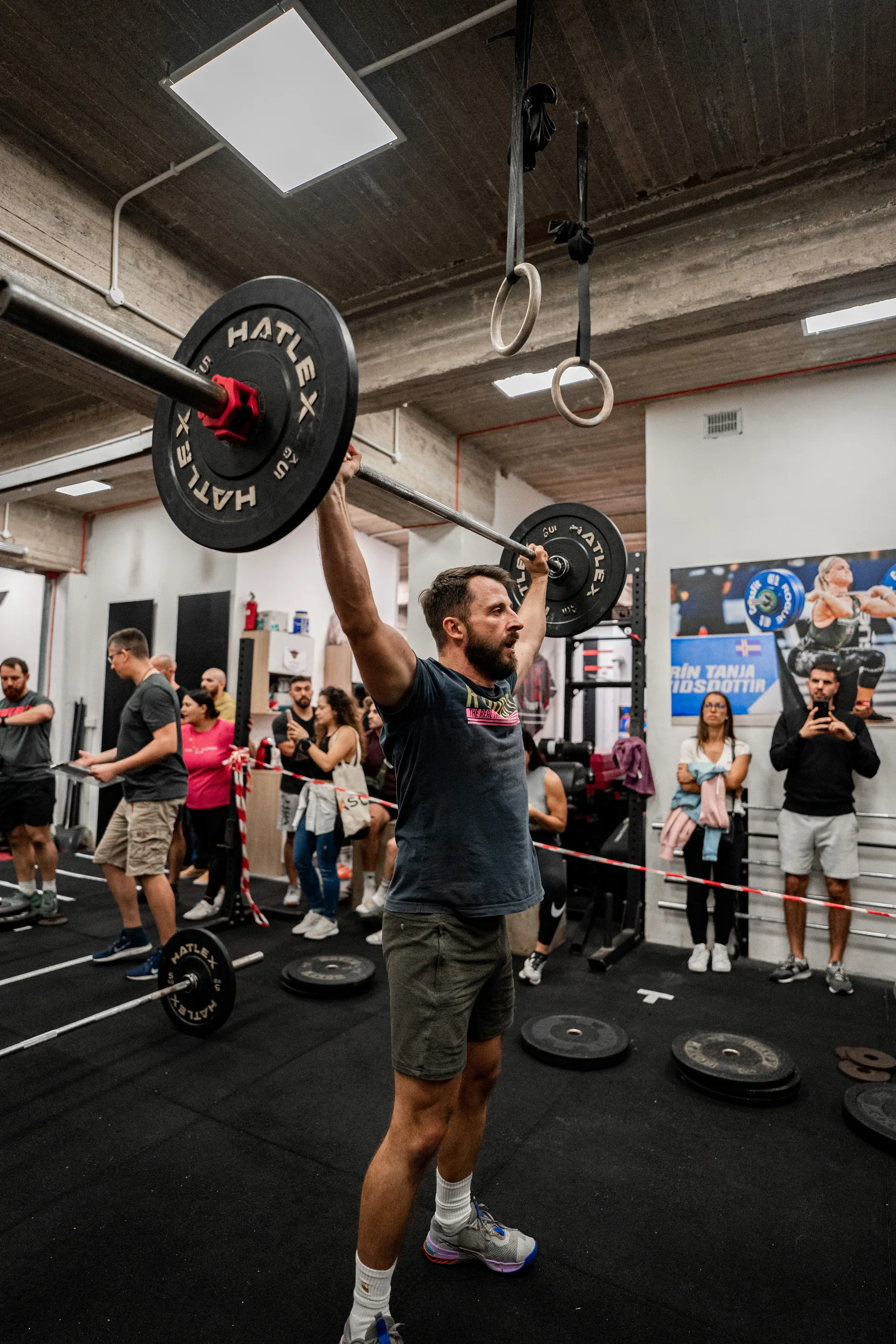
ns# HYROX Training in Malta: What the Race Demands and How to Prepare
HYROX training in Malta has gone from niche to mainstream in under two years. The race format is simple to describe and brutally honest to complete: eight one-kilometre runs, each followed by a functional fitness station. No surprises, no hidden movements, the same workout worldwide. That repeatability is exactly why it rewards structured preparation, and why turning up to a few random workouts in the week before the event is the fastest way to wreck your time.
This guide explains what the race actually asks of your body, the common mistakes athletes make in their prep, and what a coached HYROX programme in Malta should look like.
What HYROX Actually Demands
The race totals 8 km of running interspersed with eight stations, completed back to back. The stations are fixed:
- 1000 m SkiErg
- 50 m sled push
- 50 m sled pull
- 80 m burpee broad jumps
- 1000 m row
- 200 m farmers carry
- 100 m sandbag lunges
- 100 wall-balls
The total time for most first-timers sits between 75 and 110 minutes. For experienced athletes, sub-70 is the benchmark. The physiological profile is interesting: you need a strong aerobic engine (you are running for over half the event), but every station hits a different system. The sled work is leg-driven strength under fatigue. The lunges are eccentric load with a sandbag on your shoulders. The wall-balls are a coordination and breathing test when your legs already have nothing left.
The result is that HYROX punishes athletes who only train one quality. Pure runners hit a wall at the sled. Pure CrossFitters blow up on the running between stations. The race rewards balanced preparation.
The Four Pillars of HYROX Prep
Good HYROX programming covers four distinct qualities. Skip one and your race time suffers.
Aerobic base. You need the engine to run eight kilometres while keeping a workable heart rate. This is built through steady running, rowing, ski intervals, and longer pieces at conversational pace.
Strength. Sled push, sled pull, farmers carry, and sandbag lunges all reward absolute strength. If you cannot squat your bodyweight and carry heavy loads with good posture, the strength stations will cost you minutes, not seconds.
Stamina under load. This is the bridge skill. Holding a strong pace while breathing hard with a sandbag across your shoulders is not the same as fresh strength or fresh running. It has to be trained directly.
Race-specific practice. The transitions, the pacing, the wall-ball technique under fatigue, the sled angles. These are skills, and skills only come from rehearsing the actual movements at intensity.
A typical week for someone serious about a HYROX race in Malta should touch all four pillars. One day of pure aerobic work, one day of heavy strength, one or two days of mixed conditioning, and at least one day of race-specific simulation.
The Most Common Mistakes
After watching plenty of athletes prepare for HYROX, the same patterns come up.
Too much running, not enough strength. Runners assume that because the race involves running, more running is the answer. It is not. The fastest HYROX athletes are strong, and the sled stations alone can account for 8 to 12 minutes of your total time if your legs are weak.
Too much CrossFit, not enough running. The other side of the coin. Athletes from a CrossFit background often have the strength and the engine for short pieces, but no experience pacing a continuous 60 to 90 minute effort. The transition from station back to running is where they lose chunks of time.
Skipping technique. Wall-balls done badly cost energy on every rep. Sled pushes with a high hip position waste force. Burpee broad jumps without a rhythm drain the legs. Technique work is not glamorous, but it pays back across 100 reps.
No race simulation. You cannot show up on race day and discover that your shoes do not suit the running surface, your sandbag carry technique falls apart at rep 60, or that you cannot pace yourself between station 4 and station 5. Simulation sessions teach you what to do when things hurt.
What a Coached HYROX Programme Looks Like
At F15 Training CENTR in Msida, the HYROX programming runs across four dedicated classes that map cleanly onto the four pillars above:
- HYROX Baseline focuses on aerobic capacity, running technique, and endurance. This is the engine work.
- HYROX Strength builds the heavy sled, lunge, and carry capacity through compound lifts and muscular endurance.
- HYROX Stamina trains high-intensity conditioning across ERG machines, intervals, and running, replicating race demands.
- HYROX Performance is a 90-minute Sunday session, the longest class on the schedule, designed to replicate race intensity with full stations and longer formats.
Athletes preparing for a race typically combine two or three of these classes per week, alongside CrossFit or Functional Strength sessions for general capacity. The programming is connected across classes, so a heavy sled day in HYROX Strength is not followed by a hard sled day in HYROX Stamina the next morning. That kind of coordination is the difference between progress and burnout.
If you are new to functional training entirely, the route in is the no-sweat intro consultation, where a coach maps your current fitness, your race goal, and your timeline. From there you start with four personal training sessions to learn the movements safely before stepping into group HYROX classes.
Who HYROX Suits
HYROX is not just for athletes who already race. The programme suits people who want their first race, people chasing a faster time, people who enjoy a balance of endurance and strength, and people who want a clear goal to train for. The structure of the race makes progress measurable, which is what most people are missing when they train alone.
It also suits people who do not want to make every decision themselves. Coached programming removes the guesswork: you turn up, the work is laid out, the scaling is clear, and the path from week one to race day is visible.
Start With a Plan
If you are considering a HYROX race in 2026, the next step is a conversation, not a workout. Book a no-sweat intro at F15 Training CENTR in Msida and walk through your goal, your timeline, and the right mix of classes to get you race ready.