
Losing Weight in Malta With Strength Training
Most people in Malta who want to lose weight start the same way: more running along the Sliema front, longer walks in Ta' Qali, a treadmill session before work, maybe a spin class or two. The scale moves a little, then stops. Clothes fit slightly better for a month, then stop changing. Motivation fades because the effort feels enormous compared to the result.
If that pattern sounds familiar, the issue is rarely willpower. It is method. Losing weight in Malta with strength training is a slower-looking but faster-working route to real fat loss, because it changes the composition of your body, not just the number on the scale. This piece explains why, how to structure it, and what to track.
Why Cardio Alone Stalls
Cardio burns calories during the session. That is genuinely useful, especially for cardiovascular health, mood, and general conditioning. The problem is what happens after the session.
When you diet and rely only on running, cycling, or classes that are 95 per cent cardio, your body loses fat, water, and a meaningful amount of muscle. Losing muscle drops your resting metabolic rate, which means you burn fewer calories every hour of every day, not just during training. Over three to six months you end up smaller but softer, hungrier, and prone to regaining the weight the moment a holiday or a busy work period hits.
Strength training changes that equation. When you lift with structure and eat enough protein, most of the weight you lose is fat, and you protect (or build) muscle at the same time. The scale might move more slowly than someone doing daily 10km runs, but the mirror, your measurements, and your body composition tell a very different story.
What "Strength Training for Weight Loss" Actually Looks Like
Strength training for fat loss is not powerlifting. You are not chasing a one-rep max. The framework most people benefit from includes:
- Compound lifts as the backbone: squats, deadlifts, presses, rows, lunges. These recruit large amounts of muscle per rep, which is efficient for both strength and calorie burn.
- Moderate rep ranges (typically 6 to 15 reps per set) with enough weight that the last two reps are genuinely hard.
- Three to four sessions per week, not six. Recovery is where the adaptation happens.
- Conditioning added on top, not instead. Short interval work, sled pushes, rowing, skipping, wall-balls, and thrusters raise your heart rate and burn calories without eating into your recovery the way long, slow cardio can.
- Progression tracked over weeks, so you know the weight on the bar is going up, or the reps are going up, or your work capacity in the same time is going up.
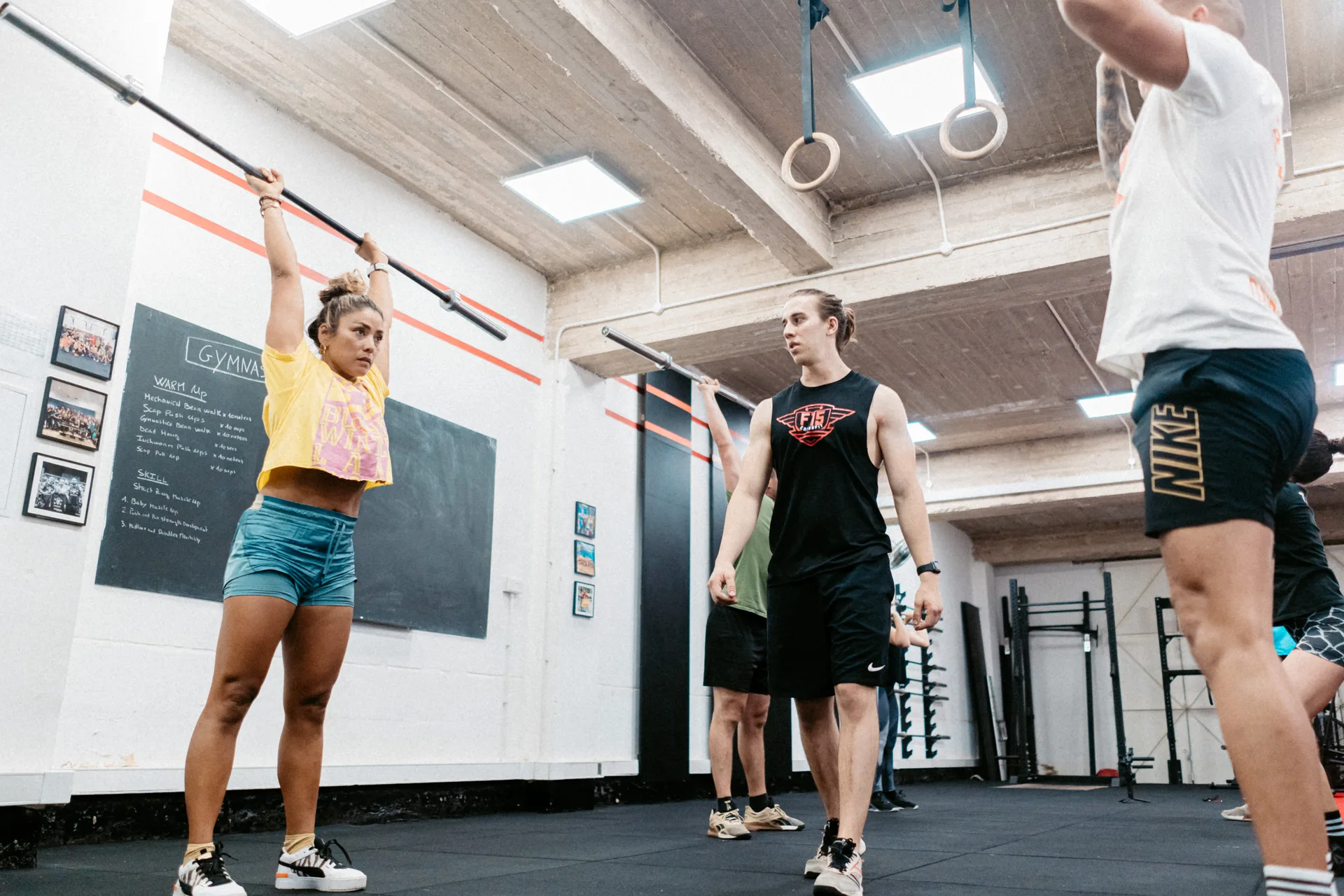
This is the structure that Functional Strength, CrossFit, and HYROX-style training all sit inside. At F15 Training CENTR, Functional Strength classes run on Monday, Tuesday, and Thursday evenings and Sunday morning, and the movements are exactly the ones above: squats, deadlifts, bench press, lunges, and accessories, coached and scaled to your level.
Nutrition Does the Heavy Lifting
Training builds the engine. Nutrition decides what fuel goes in. For fat loss you need a modest calorie deficit and enough protein, usually somewhere around 1.6 to 2.2 grams per kilogram of bodyweight per day, spread across the day rather than crammed into one meal.
A few practical Malta-specific points:
- Restaurant portions, especially pasta and pizza, are calorie-dense. Enjoy them, but not five nights a week if you are trying to change body composition.
- Alcohol is the single biggest hidden factor for most weight loss clients in Malta. Two glasses of wine three or four times a week is roughly a full extra meal.
- Fish, rabbit, chicken, eggs, Greek yoghurt, legumes, and lean cuts of beef and pork are all easy protein anchors that fit the local food culture.
- You do not need to eliminate carbs. You need to control total intake and keep protein high.
F15 offers nutrition support alongside training when a member needs it, usually flagged during a check-in or reassessment. It is not a rigid meal plan handed out on day one. It is guidance adjusted to your goal, your schedule, and what you will actually stick to.
How to Measure Progress Without Chasing the Scale
Bodyweight is a noisy signal. It moves with hydration, sleep, salt, hormones, and the timing of your last meal. If it is the only number you look at, you will make bad decisions on bad days.
Better markers for body composition in Malta:
- InBody scan every 8 to 12 weeks. This separates fat mass from muscle mass so you can see what is actually changing. F15 uses InBody as part of onboarding and repeats it at the three-month reassessment.
- Benchmark workout repeated on the same schedule. If your fitness score is up and your fat mass is down, the plan is working, regardless of what the scale did on Monday.
- Photos and one or two tape measurements (waist, hips) taken every four weeks in the same lighting.
- How your training feels. Heavier weights moving faster with less soreness is a strong signal that recovery, nutrition, and training are aligned.
Track these together and you stop panicking over a two-kilo bounce after a weekend out.
Where to Start if You Are New to Lifting
If you have never lifted seriously before, walking into a random commercial gym and hoping to figure out squats from YouTube is a slow path with a high injury risk. A coached start is faster and safer.
Every new member at F15 begins with a 30-minute no-sweat intro, which is a consultation rather than a workout. You talk through your goal, your history, your schedule, and what has not worked before. From there, new members complete four personal training sessions with Coach Owain to learn the foundational movement patterns before joining group classes. For people who want fully individual sessions long-term (weight loss support, technique work, or extra accountability), personal training is available with Coach Geri and Coach Lazar.
If that structure fits what you are looking for, you can book your no-sweat intro and start the process here. Bring your questions, your training history, and honest answers about your schedule. The plan is built from there.
The Next Step
Weight loss in Malta is not a willpower problem. It is a structure problem. Lift three to four times a week, eat enough protein, add short conditioning on top, measure body composition instead of just bodyweight, and give it twelve weeks before you judge the result. If you want that structure built for you, come in for a consultation at the Msida gym and we will map out the first three months together.