
Strength Training for Women in Malta: What Actually Happens in Your First Three Months
Strength training for women in Malta has changed a lot in the past few years. More women are picking up barbells, joining group classes, and moving away from long steady-state cardio as the only way to train. The question most beginners ask is not whether they should lift, but what the first few months actually look like once they start.
This article walks through a realistic three-month arc: how you build a base, what changes in your body and confidence, and where common mistakes happen. It is written for women who are new to lifting or coming back after a long break, whether the goal is body composition, general health, or performance.
Month One: Building a Base You Can Actually Trust
The first month is not about lifting heavy. It is about teaching your body movement patterns it can repeat safely under load.
Expect to spend most of your time on:
- Squat patterns (goblet squat, back squat, front squat)
- Hinge patterns (deadlift, Romanian deadlift, kettlebell swing)
- Pushing (dumbbell press, push-up variations, strict press)
- Pulling (rows, banded pull-ups, hanging holds)
- Carrying and bracing (farmer carry, front-rack carry)
Most women underestimate how technical these movements are. The first time you set up for a proper deadlift, you will feel muscles working that a hundred crunches never touched. That is normal. Bracing your midline, keeping tension through your lats, and driving through the floor is a skill, and skills need reps at low weight before they get loaded.
You should also expect to feel sore in unfamiliar places, especially the glutes, adductors, upper back and forearms. This settles within two or three weeks as your nervous system adapts. The people who get injured in month one are almost always the ones who added weight before their technique was ready. Ego is the enemy of a strong squat.
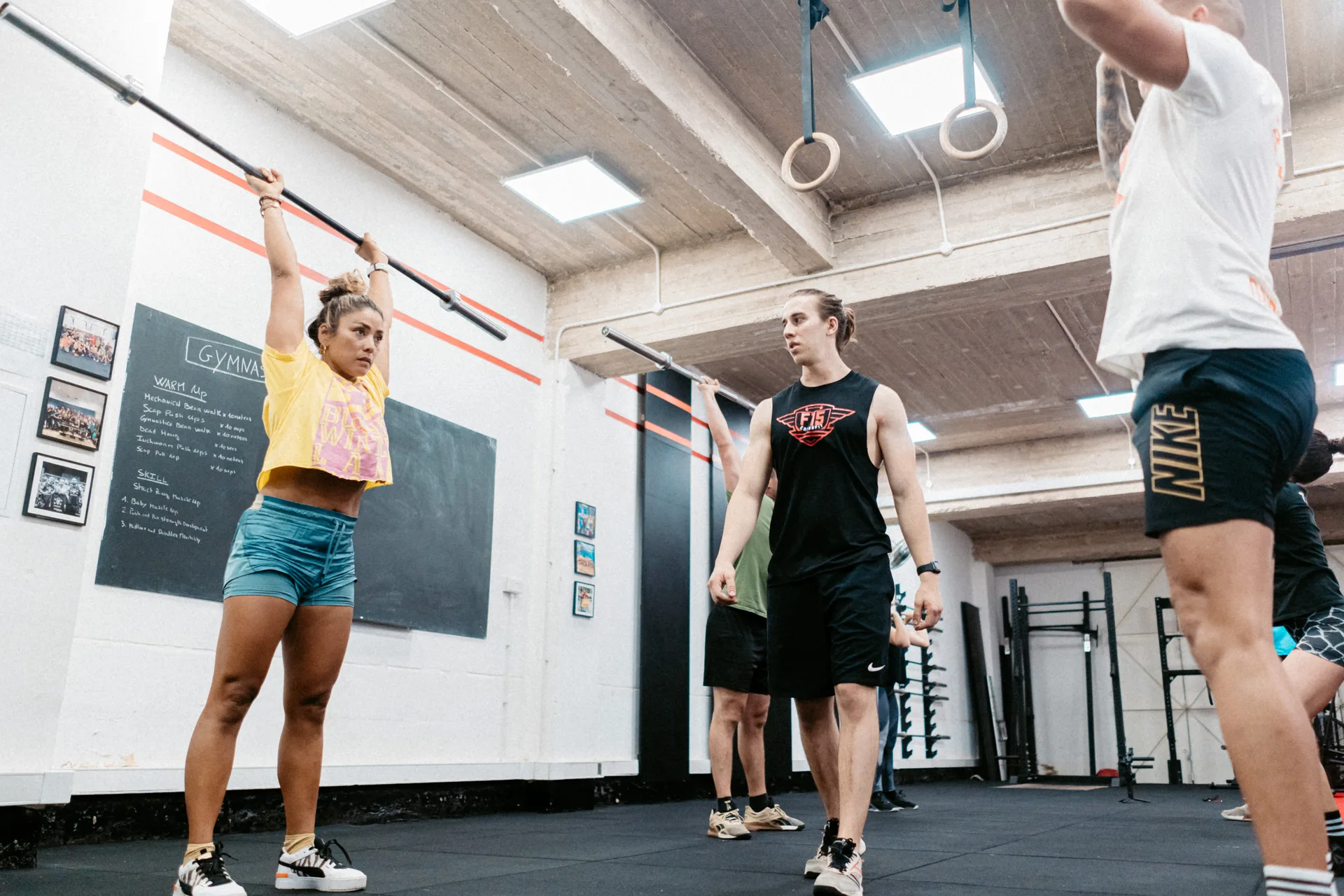
If you are starting from zero, structured onboarding matters. At F15 Training CENTR, every new member begins with a 30-minute no-sweat intro (a consultation, not a workout) followed by four personal training sessions with Coach Owain before joining group classes. This exists precisely because the first month decides whether the next twelve are safe and productive. You can read more on how to start training at F15.
Month Two: Load, Consistency, and the First Real Changes
By week five or six, the movements start to feel like yours. This is when strength training for women in Malta starts to get genuinely interesting, because the numbers on the bar begin to move.
What typically changes in month two:
- Working weights climb steadily. A deadlift that felt heavy at 40 kg in week two might feel controlled at 60 or 70 kg by week eight. This is mostly neural adaptation, not muscle growth yet.
- Recovery improves. The full-body soreness of month one fades. You will still feel worked, but you bounce back within a day.
- Body composition shifts before the scale does. Clothes fit differently. The waistband loosens even if weight is the same. This is because muscle is denser than fat, and you are adding one while reducing the other.
- Sleep and energy improve. Consistent resistance training is one of the most reliable interventions for both.
Month two is also when women start experimenting with more specialised classes. Functional Strength focuses on compound lifts (squat, deadlift, bench, lunges, accessories) and is where a lot of the raw strength work happens. Olympic Weightlifting brings in the snatch and clean and jerk, which are technical but highly rewarding once the basics click. Both classes are scalable, so a beginner can train alongside an intermediate lifter without holding anyone back.
One thing to expect: progress in month two is not linear. Some sessions feel powerful, others feel flat. Sleep, stress, nutrition and menstrual cycle all affect performance. Learning to train through an average day, rather than only on perfect days, is what separates people who stay with lifting from people who quit after eight weeks.
Month Three: Measuring Progress Properly
By the end of month three, you should have hard data on how far you have come. This matters because "I feel stronger" is a poor way to plan the next quarter of training.
Useful ways to measure progress after twelve weeks of consistent lifting:
- Working weights on the main lifts. Squat, deadlift, press, and any pulling movement. Compare week one to week twelve.
- Body composition via InBody scan. Muscle mass, body fat percentage, and segmental analysis matter far more than scale weight alone.
- Benchmark workout repeats. A short, standardised workout performed at the start and again at week twelve gives you a conditioning number that is hard to argue with.
- Movement quality on video. Film a squat in week one and week twelve. The difference is often more striking than any number.
F15 Training CENTR runs a three-month reassessment for exactly this reason: repeat the benchmark workout, redo the InBody scan, and use the data to adjust the plan. Without this step, most people drift. With it, you can see whether the last twelve weeks actually worked, and where to focus next.
By week twelve, you should be able to answer three questions clearly: what has got stronger, what has changed in your body composition, and what movements still need work. If any of those answers are vague, your programme was not specific enough.
Where to Train and What to Look For
The gym for women in Malta that will get you the best results is not the one with the most equipment. It is the one where coaches watch every set, where the plan matches your goal, and where beginners are prepared before being thrown into group classes. Ask any prospective gym how new members are onboarded, how progress is measured, and what happens when a movement is not going well. The answers will tell you everything.
If you want to see how structured coaching, functional strength and Olympic weightlifting fit together in practice, book a no-sweat intro at F15 Training CENTR in Msida. Thirty minutes, no workout, just a conversation about your goals and how the first three months would look for you.