
Strength Training for Women in Malta: A Practical Guide to Getting Started
Strength training for women in Malta has shifted in the last few years. More women are picking up barbells, dumbbells, and kettlebells, and fewer are spending an hour on the cross-trainer hoping something changes. The reason is simple: lifting weights builds muscle, improves body composition, supports bone density, and changes how you feel in your own body. None of those outcomes come from cardio alone.
This guide is for women who want to start training with weights but are not sure where to begin, what a sensible programme looks like, or what to expect inside a coached gym in Malta.
Why Strength Training Matters More Than You Think
Most women come to strength training for one of three reasons: they want to change body composition, they want to feel stronger in daily life, or they want to protect their long-term health. All three are linked.
Muscle is metabolically active tissue. The more lean muscle you carry, the more your body burns at rest, which makes maintaining a healthy weight easier than relying on cardio and food restriction. Strength training also improves bone density, which becomes more important from your thirties onward and especially around perimenopause. And it changes posture, joint stability, and how confident you feel carrying shopping, lifting children, or hiking up to Mdina without your knees complaining.
A common worry is "I do not want to get bulky." Building visible muscle mass takes years of structured training, deliberate eating, and consistency that most people never reach by accident. Women who lift weights two or three times a week look leaner, not larger, because muscle is denser than fat and sits closer to the bone.
What Good Strength Training Actually Looks Like
A sensible women's strength programme is not complicated. It includes:
- Compound lifts: squats, deadlifts, presses, rows, lunges. These movements train multiple muscle groups at once and give you the most return for your time.
- Progressive overload: small, planned increases in weight, reps, or quality over weeks and months. This is what makes you stronger. Random workouts where the weight never changes do not.
- Accessory work: targeted exercises for specific areas like glutes, mid-back, or core that support the main lifts.
- Conditioning: short, controlled cardio work to keep your heart and lungs sharp. Rowing, skiing, biking, skipping.
- Recovery: rest days, sleep, and food that supports the work you are doing.
You do not need to train six days a week. Two to four well-structured sessions are enough to make consistent progress, especially in the first year.
Where CrossFit and HYROX Fit In
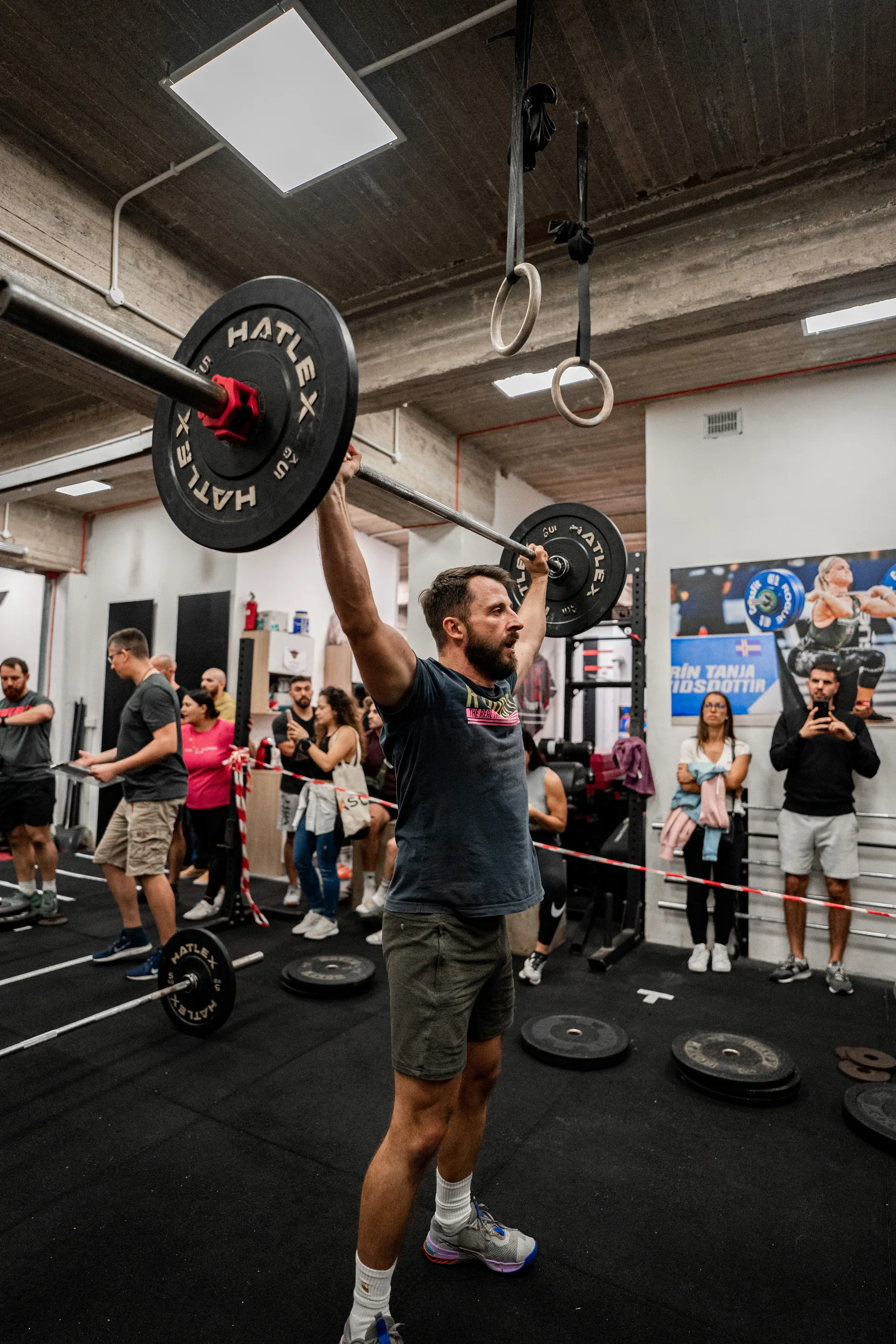
Women's strength training in Malta does not have to happen in isolation in front of a mirror. Group classes that include barbell work, gymnastics, and conditioning give you structured strength training plus coaching, community, and variety in one place.
CrossFit classes for women teach the same compound lifts a strength programme would prescribe, but inside a coached environment with scaling for every movement. A snatch can start with a PVC pipe. A pull-up can start with a band. A squat can start with bodyweight. The progression is built into the methodology.
HYROX-style training adds a stamina element: sled pushes, lunges, wall-balls, rowing, running. For women who want a balance of strength and conditioning, it works well, and it has the side effect of giving you a measurable race to train for if you want one.
At F15 Training CENTR in Msida, strength is woven into most classes, with dedicated sessions for Functional Strength, Olympic Weightlifting, and HYROX Strength alongside CrossFit and Stamina classes. All classes are scalable, which matters more than any single session in the timetable.
How to Start Without Guesswork
The single biggest reason women stop strength training after a few weeks is not the weights. It is the lack of a plan. Walking into a commercial gym, picking exercises off a wall chart, and hoping for results almost always ends the same way: boredom, no visible progress, and eventually quitting.
A better starting point looks like this:
- Book a consultation. Sit down with a coach, talk about your goals, your training history, any injuries, and your schedule. At F15 Training CENTR this is a 30-minute no-sweat intro - a conversation, not a workout.
- Get a baseline. An InBody scan and a benchmark workout give you numbers to compare against later. Without a baseline, you cannot tell whether anything is working.
- Learn the movements first. New members at F15 Training CENTR complete four personal training sessions with Coach Owain before joining group classes. This is where you learn how to squat, hinge, press, and pull properly, plus how class structure works and how to scale.
- Join classes with confidence. Once the movement basics are in place, group classes stop feeling intimidating. You know what the cues mean, you know how to scale, and you know what success looks like for you.
- Reassess every three months. Repeat the benchmark workout and the InBody scan. Compare. Adjust.
This structure removes the guesswork that derails most beginners.
What Progress Actually Looks Like
Realistic expectations matter. In the first three months, most women notice they feel stronger in daily life, sleep better, and start seeing small composition changes. In six months, the compound lifts start to feel like real strength: a deadlift that was 40 kg becomes 60 or 70, a press that was the empty bar becomes weighted.
Visible body composition changes follow consistency, not intensity. Women who train two or three times a week for a year and eat sensibly almost always look and feel noticeably different. Women who train six times a week for three weeks and then quit do not.
If nutrition is part of the picture for you, that conversation belongs alongside the training plan, not bolted on at the end. Strength gains are easier to see when food is supporting the work.
Your Next Step
Strength training is not complicated, but it is easier with a coach, a plan, and a room full of other women doing the same work. If you are in Malta and want to start lifting weights with structure rather than guesswork, book a no-sweat intro at F15 Training CENTR and have a conversation about what a sensible first three months would look like for you.