
Weight Loss Malta: A Realistic Training Guide Without Crash Diets
Most people who want weight loss in Malta start the same way: a sudden calorie cut, two weeks of daily cardio, and a food diary that lasts until the first family lunch. Two months later the scale is back where it started, and the confidence dip makes the next attempt harder. The problem is not willpower. The problem is the approach.
Sustainable weight loss in Malta is a longer game built on three pillars: training that actually burns and builds, food habits you can hold for years, and honest tracking that tells you whether the plan is working. This guide walks through how to structure each one so you finish the year lighter, stronger, and still enjoying life.
Why Crash Diets Fail (Especially in Malta)
Malta's food culture is not built for extreme restriction. Ftira lunches, family Sundays, wine on the terrace, festa season, summer barbecues. If your diet plan cannot survive a single weekend at Golden Bay, it will not survive twelve months.
The physiology backs this up. Aggressive calorie cuts lower your resting metabolic rate, drop muscle mass alongside fat, and spike hunger hormones. You lose weight, yes, but a chunk of that weight is muscle, water and glycogen. When you resume normal eating (and you will), the fat comes back faster than the muscle. That is why the scale can rebound higher than your starting point after each cycle.
The alternative is not another gimmick. It is body recomposition: losing fat while preserving or gaining muscle. This is what makes weight loss visible, keeps clothes fitting better, and stops the yo-yo pattern.
The Training Side: Strength First, Cardio Second
If you only had time for one type of training for fat loss in Malta, it should be resistance training. Muscle is metabolically expensive tissue. The more you have, the more calories your body burns at rest, and the easier maintenance becomes once you reach your target.
A useful weekly structure looks like this:
- Three to four sessions of mixed strength and conditioning. Compound movements: squats, deadlifts, presses, rows, lunges, carries. These recruit large muscle groups, drive hormonal responses that favour fat loss, and improve how your body handles carbohydrates.
- One to two shorter conditioning sessions. Rowing, running, skiing, skipping, intervals. Not marathon cardio. Twenty to thirty minutes of quality work beats an hour of grinding.
- Daily walking. Ten to twelve thousand steps a day is one of the most underrated fat-loss habits, especially in a country where you can walk the promenade year round.
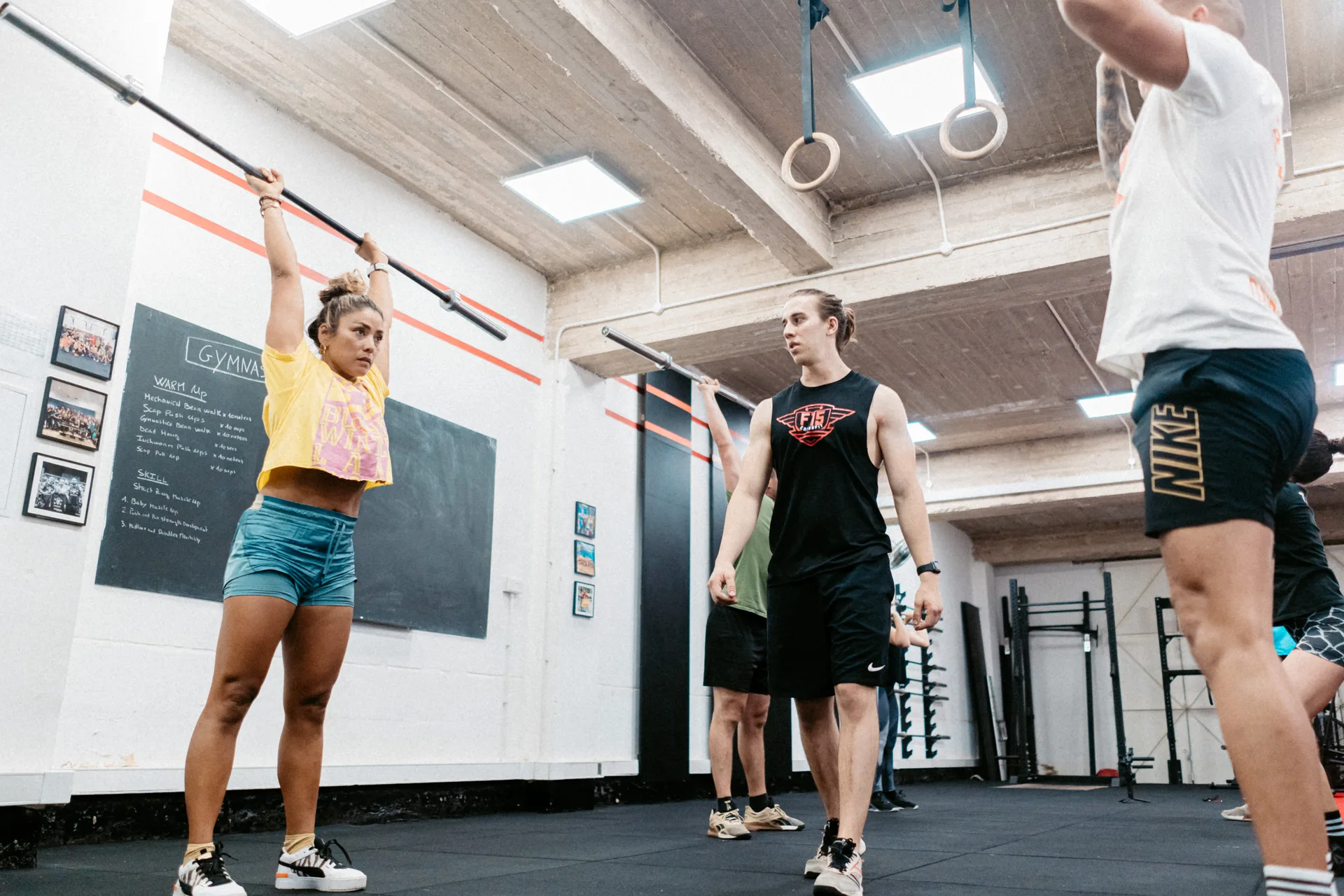
This is why CrossFit and HYROX-style training work so well for body recomposition in Malta. The sessions are constantly varied, they combine strength with conditioning, and they are coached and scalable. A beginner doing thrusters with a training bar gets the same movement pattern as an experienced athlete with a loaded barbell, just at a load that matches their level.
If you want a coached, structured route into this style of training, the F15 Training CENTR onboarding process starts with a thirty-minute consultation before anyone touches a barbell. That first conversation is where a realistic plan gets built around your goal, schedule, and current fitness.
Nutrition That Survives Real Life in Malta
Nutrition for lose-weight goals in Malta does not require weighing every olive. It requires a small number of habits held consistently.
Protein first, at every meal. Aim for a palm-sized portion of protein (chicken, fish, eggs, yoghurt, cottage cheese, legumes) at breakfast, lunch and dinner. Protein preserves muscle during a calorie deficit, keeps you full for longer, and has the highest thermic effect of any macronutrient.
Build meals around vegetables and whole carbs. Fill half the plate with vegetables, a quarter with a starch (potato, rice, pasta, bread) and a quarter with protein. This is not a low-carb diet. Carbs fuel training, and training is what changes body composition.
Manage the extras honestly. Alcohol, olive oil poured heavy, restaurant desserts, the second helping of pastizzi. None of these are banned, but none of them are free either. Awareness beats denial.
Sleep and stress. Under-slept, over-stressed people lose fat slower and hold onto more of it around the midsection. Seven to nine hours is not a luxury when the goal is body recomposition in Malta.
You do not need to hit every target every day. You need to hit most targets, most days, for months. That is the whole trick.
Track What Actually Matters
The bathroom scale lies. It moves with water, food volume, salt, hormones, and the previous night's sleep. Using it as your only metric is the fastest way to lose motivation.
Better data points for sustainable weight loss in Malta:
- Body composition scans. An InBody scan separates fat mass from muscle mass. You can be gaining muscle and losing fat while the scale barely moves, and only a composition scan will show you that.
- Photos in the same lighting, same clothes, every four to six weeks. Slow visible change is the truth.
- Waist and hip measurements. Cheap, honest, and less noisy than daily weigh-ins.
- Performance in training. Lifting heavier, running longer, recovering faster. These are lagging indicators of a body that is working better.
- How your clothes fit. Unromantic but reliable.
Structured check-ins matter here. Reassessing every three months, repeating a benchmark workout, and reviewing an InBody scan gives you evidence-based feedback instead of guesswork. If the numbers are stuck, the plan gets adjusted before three more months pass.
Common Mistakes That Slow Fat Loss
A few patterns show up in almost every stalled weight-loss attempt:
- Doing too much, too soon. Six sessions a week from a standing start leads to injury, burnout or both. Start with three and earn the fourth.
- Cutting calories too aggressively. A moderate deficit of ten to twenty percent is sustainable. Half your maintenance calories is not.
- Skipping strength training in favour of cardio. Cardio burns calories during the session. Muscle burns calories all day.
- Ignoring recovery. Progress happens in the gap between sessions, not during them.
- Training alone with no feedback. Nobody sees their own squat clearly.
Your Next Step
Sustainable fat loss in Malta is not complicated, but it is specific to you. The right training frequency, the right calorie range, the right class mix all depend on your starting point, your schedule and your history with exercise. That is what a proper consultation solves before you buy a single new pair of trainers.
If you want a coached, measurable route rather than another January reset, book a no-sweat intro at F15 Training CENTR in Msida and start with a plan that matches the goal.